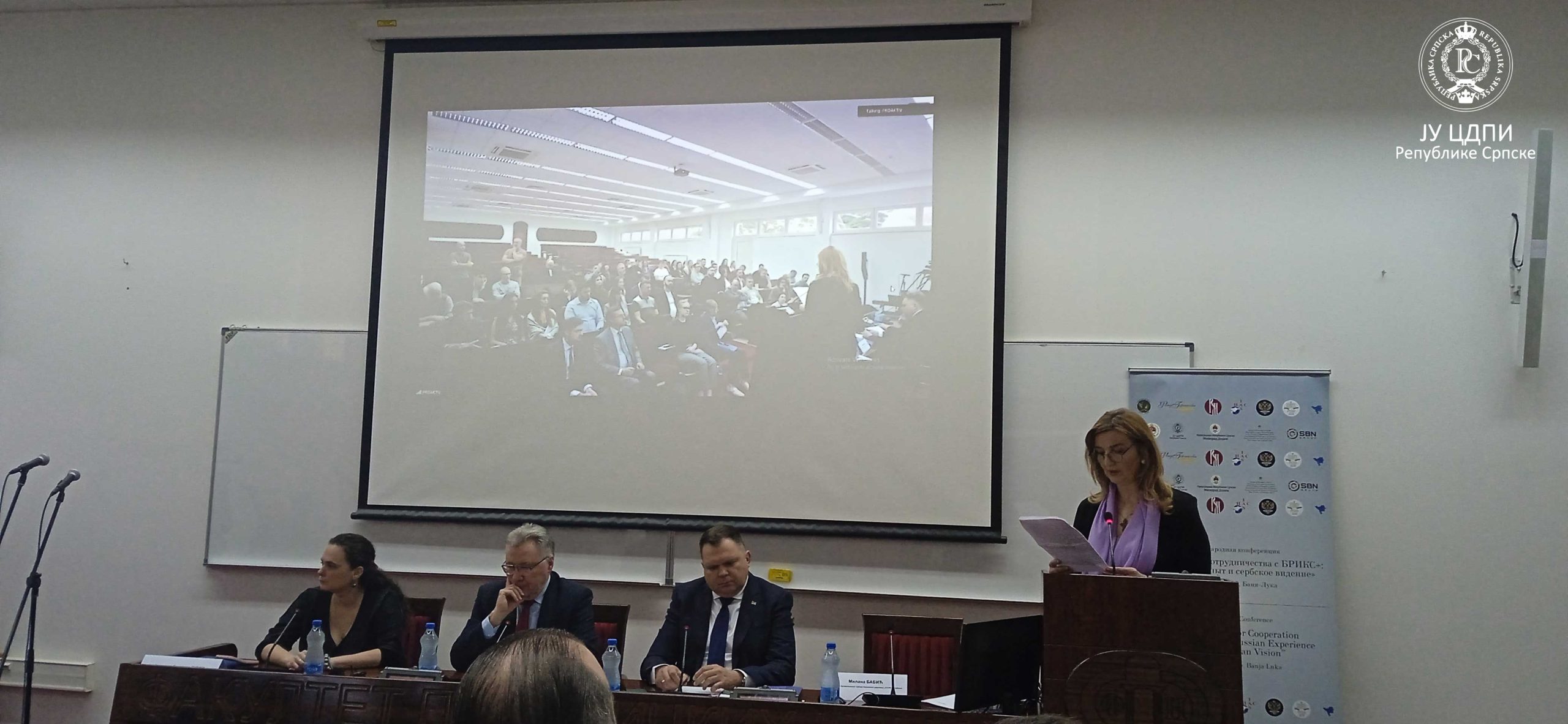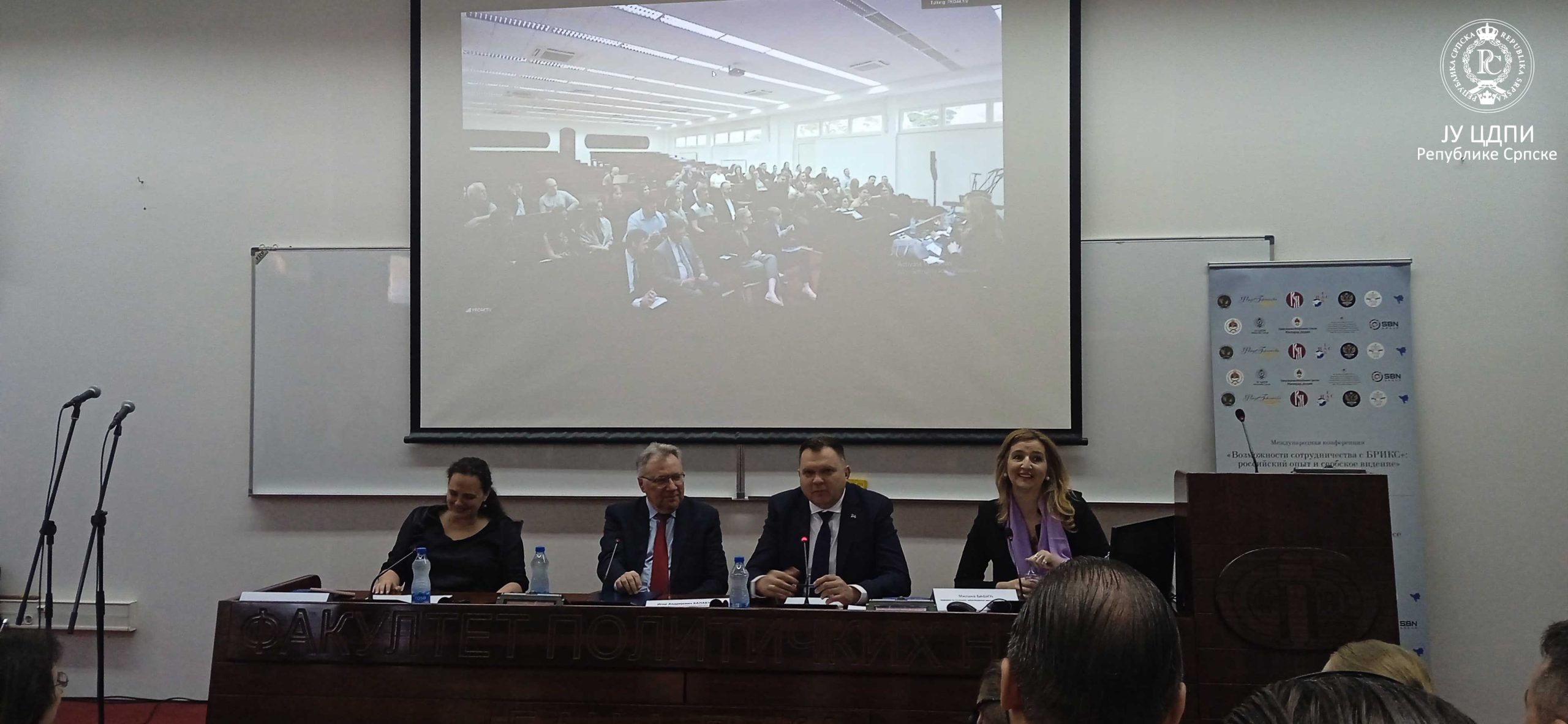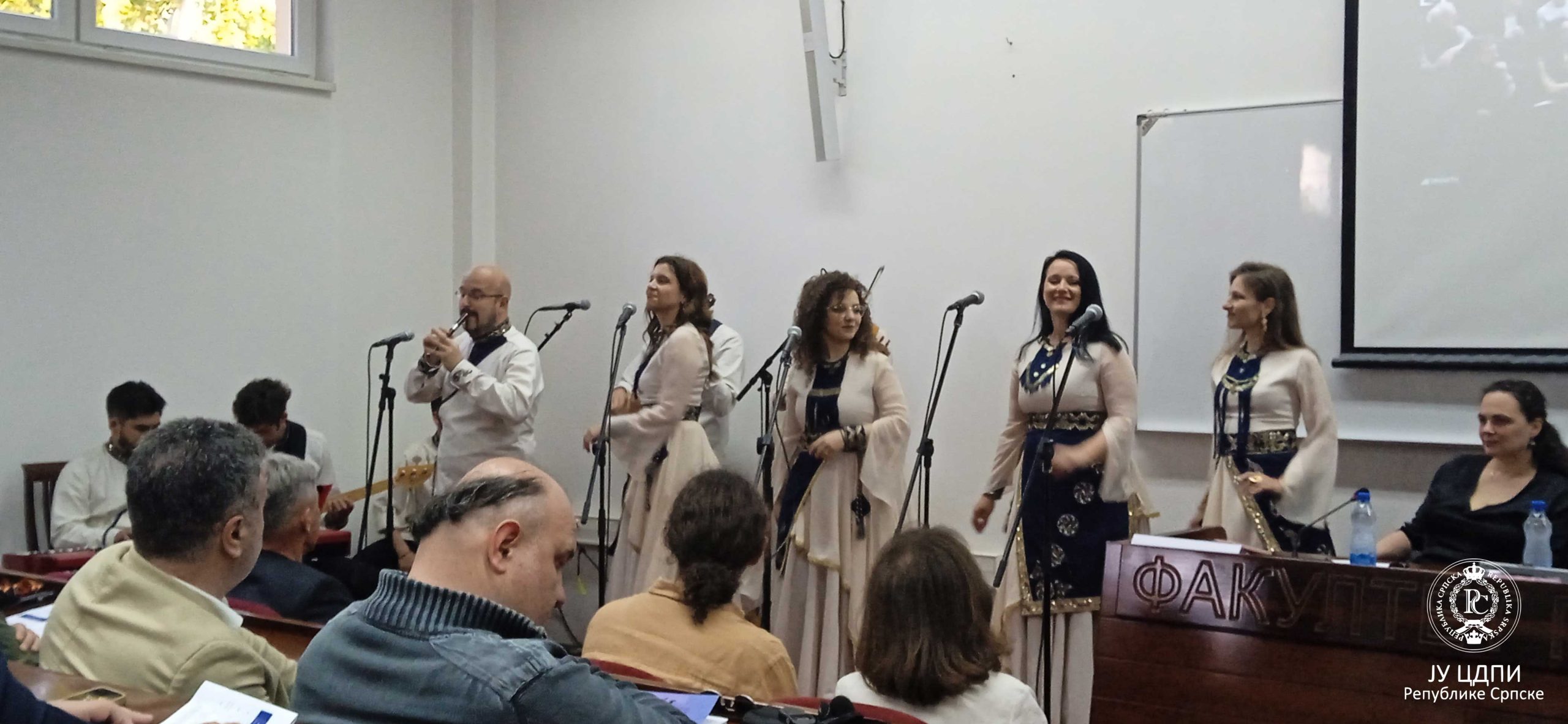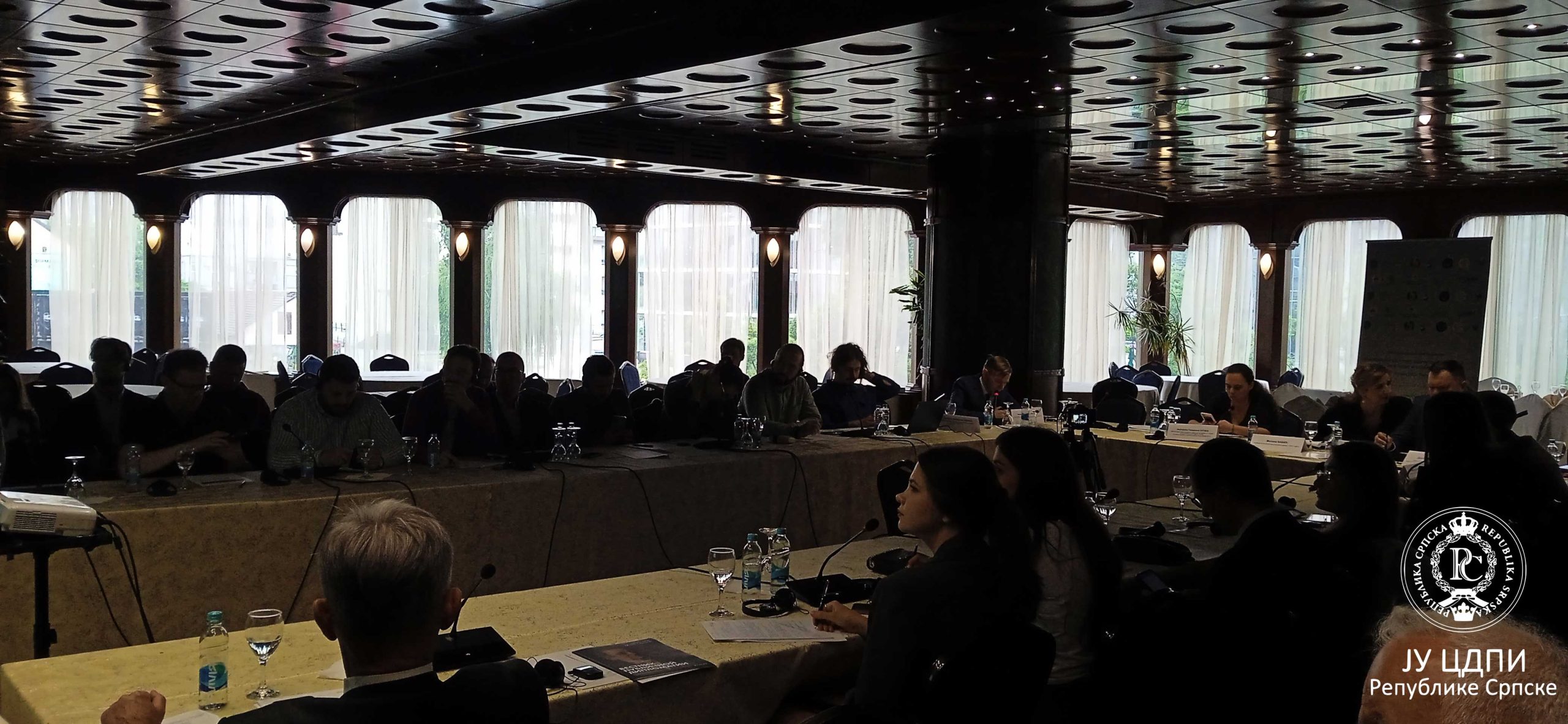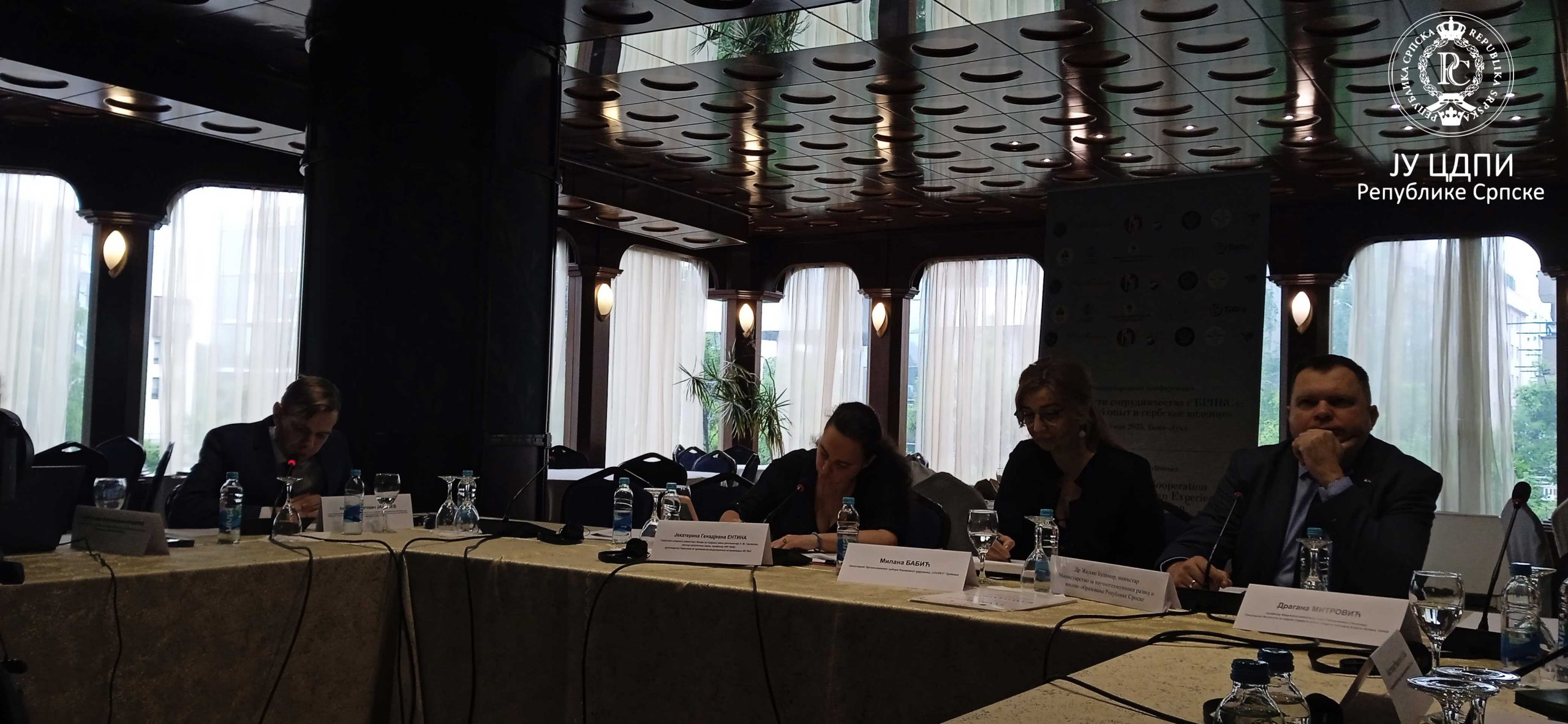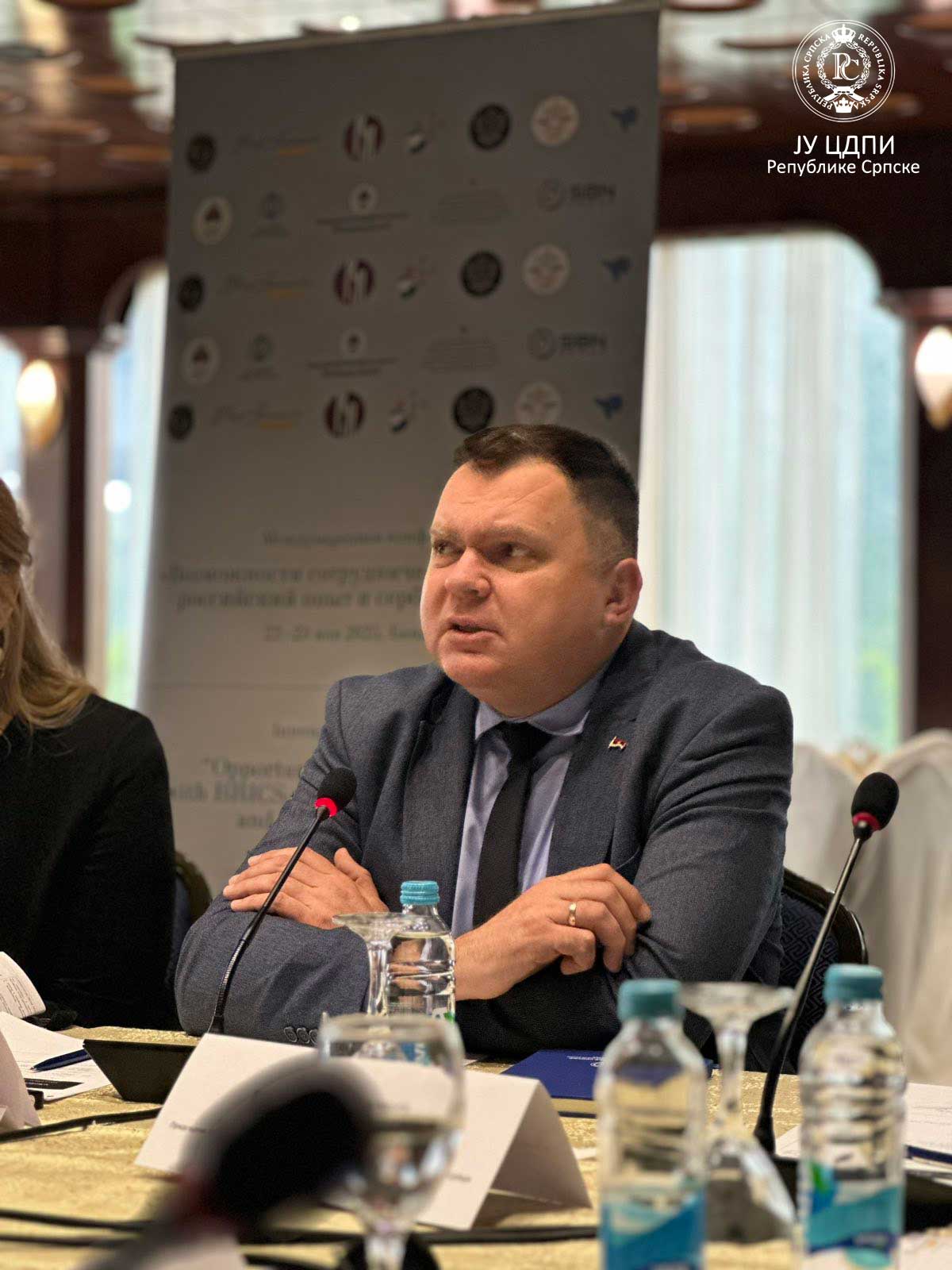

From May 22 to 23, 2025, an international scientific conference titled “Opportunities for Cooperation with BRICS+: The Russian Experience and the Serbian Vision” was held in Banja Luka. The aim of the conference was to encourage interdisciplinary dialogue on the potential for cooperation between BRICS+ countries and partner states, with special emphasis on the role of Serbia and Republika Srpska in shaping new channels of connectivity within the emerging multipolar world order.
The conference was organized by the Literary Association “Susret” from Trebinje with the support of the Alexander Gorchakov Public Diplomacy Fund, the Presidential Fund of Republika Srpska, the Ministry of Scientific and Technological Development and Higher Education of the Republic of Srpska, the Center for Socio-Political Research of the Republic of Srpska, the Embassy of the Russian Federation in Bosnia and Herzegovina, the Russian House in Belgrade, partner organizations and academic institutions from Russia, China, Brazil, the UAE and several Balkan countries.
The formal opening of the conference, held on May 22 in the amphitheater of the Faculty of Political Sciences at the University of Banja Luka, was attended by the Ambassador of the Russian Federation to Bosnia and Herzegovina His Excellency Igor Andreevich Kalabukhov; Dr. Yekaterina Gennadyevna Entina, Advisor to the Executive Director of the Gorchakov Fund, Professor at the National Research University “Higher School of Economics” and Head of the Department for Black Sea–Mediterranean Studies at the Institute of Europe of the Russian Academy of Sciences; Assistant Professor Dr. Željko Budimir, Minister for Scientific and Technological Development and Higher Education of the Republic of Srpska and university professor at the Department of Political Science in Banja Luka and Milana Babić, President of the Organizing Committee of the Literary Association “Susret” from Trebinje.
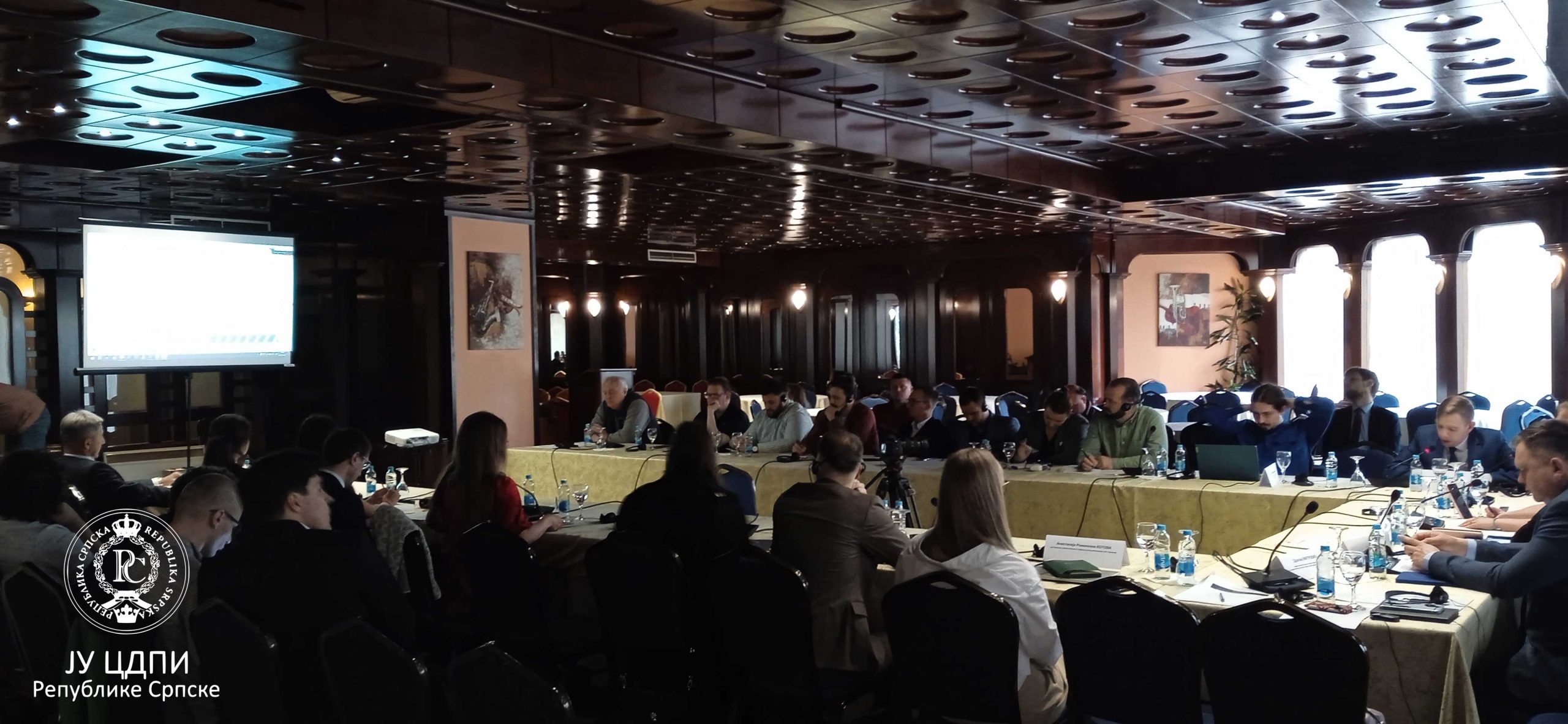
The working part of the conference was held on the second day, in the ceremonial hall of the Hotel Bosna in Banja Luka. On this occasion, a number of distinguished experts from Russia, China, Brazil, Serbia, Republic of Srpska, North Macedonia and other countries gathered. Within the framework of two expert roundtables and a youth session, topics were presented addressing strategic, economic, political and cultural aspects of cooperation within the BRICS+ format.
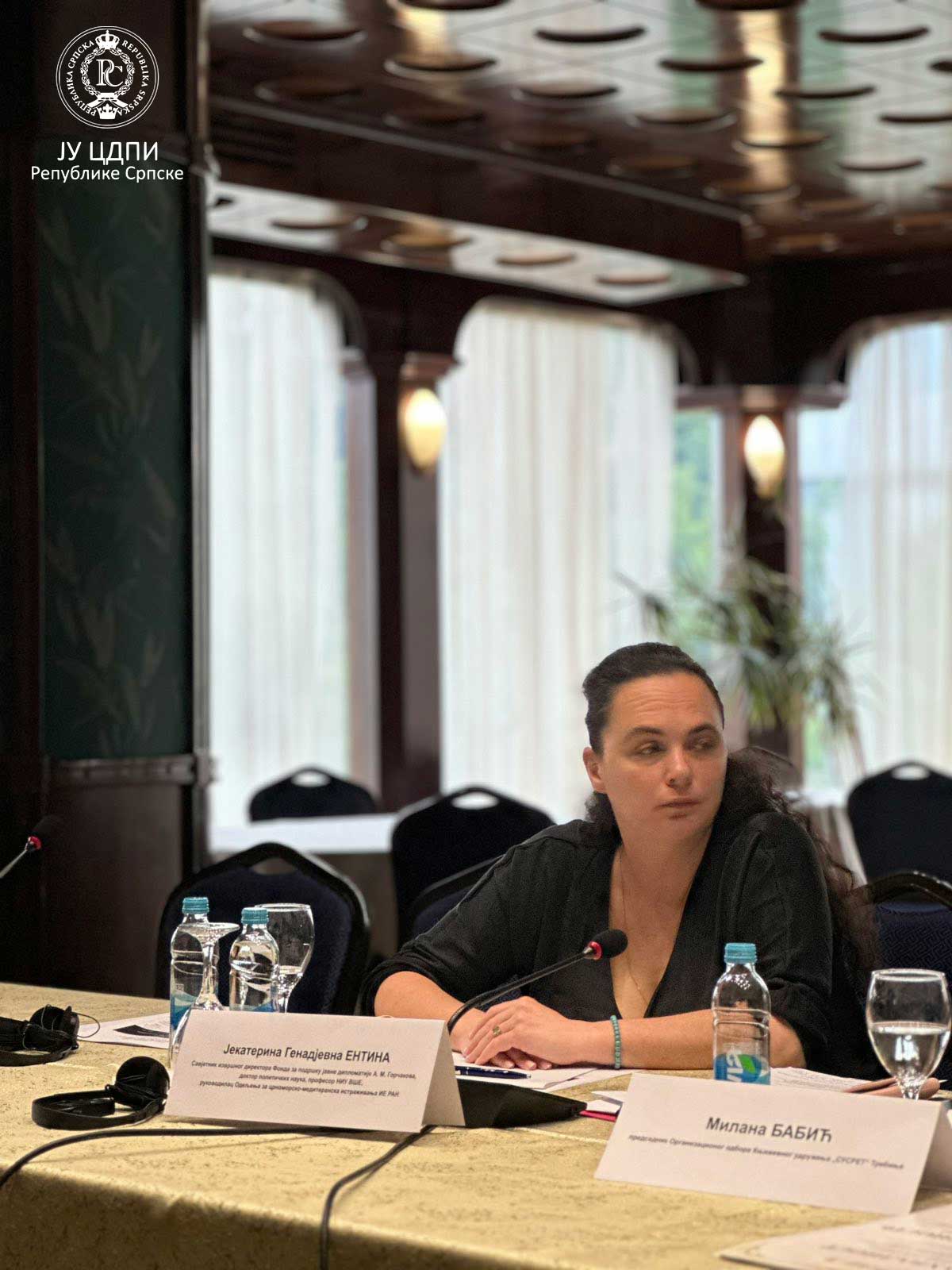
The first expert roundtable, moderated by Prof. Dr. Yekaterina Entina, brought together leading experts in the fields of international relations and development policy: Assistant Professor Dr. Željko Budimir, Minister for Scientific and Technological Development and Higher Education of Republika Srpska; Dr. Dmitry Suslov, Deputy Director of the Centre for Comprehensive European and International Studies at the Faculty of World Economy and International Affairs of the Higher School of Economics in Moscow and Nikolay Yakushev, Research Associate at the Vologda Research Center of the Russian Academy of Sciences and an expert on several international platforms. Simultaneously, Prof. Dr. Shi Chi-Yu, Distinguished Professor and Director of the Center for Global South Studies at Tongji University in Shanghai, addressed the gathering via video link.
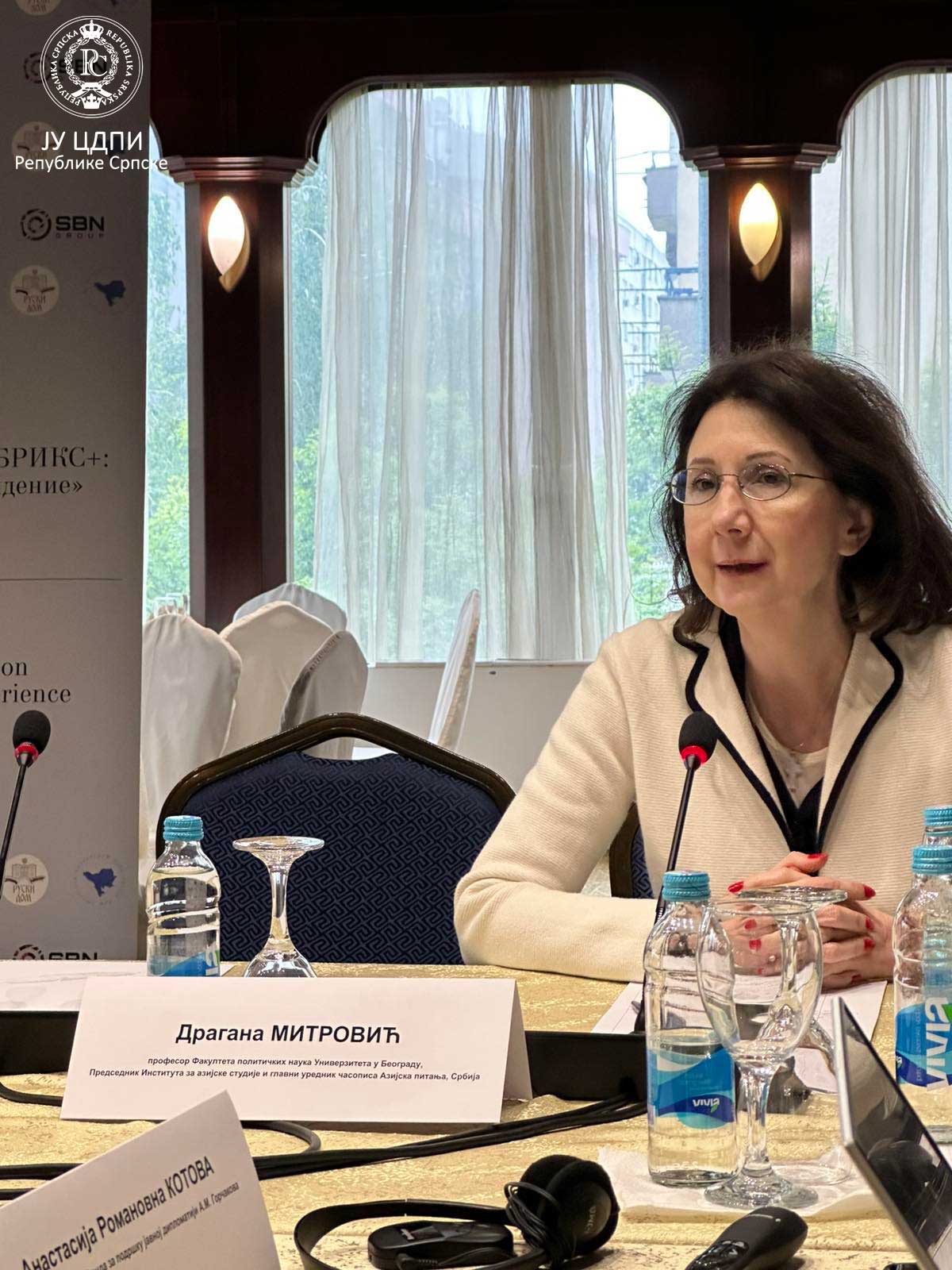
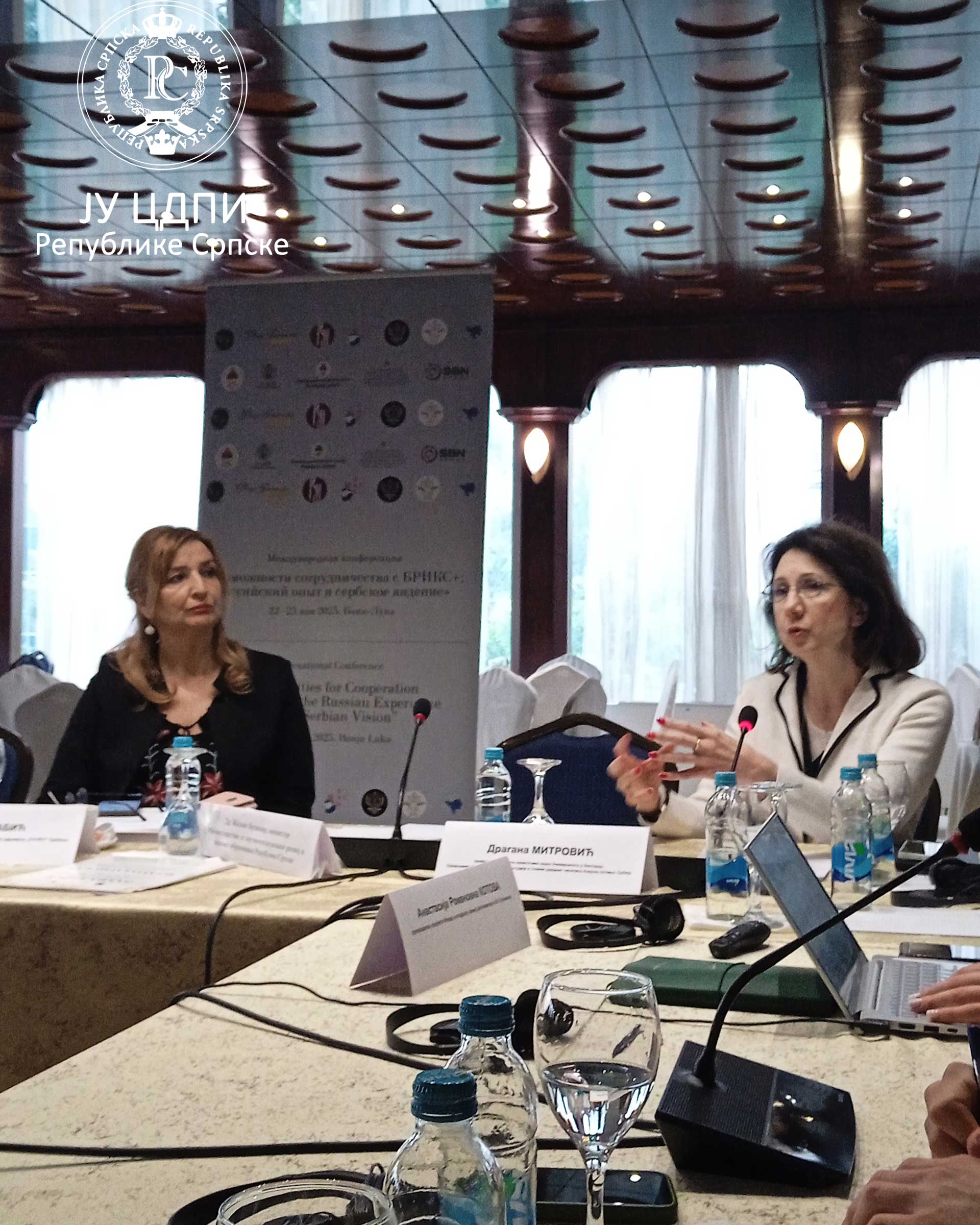
The second panel, structured to clarify the vision of multipolarity from the perspective of the Global South, featured distinguished experts from China, Brazil and Serbia. Participants included Prof. Dr. Dragana Mitrović from the Faculty of Political Sciences at the University of Belgrade and President of the Institute for Asian Studies; Paulo Nogueira Batista Jr., former Vice President of the New Development Bank and Executive Director at the IMF; Prof. Dr. Alexis Dantas from the State University of Rio de Janeiro; Prof. Dr. Yekaterina Entina and Anastasiya Kotova, Project Manager at the Gorchakov Fund. The panel concluded with a presentation by Prof. Dr. Janko Bačev, Full Professor at the Faculty of Law of the International Slavic University in Macedonia.
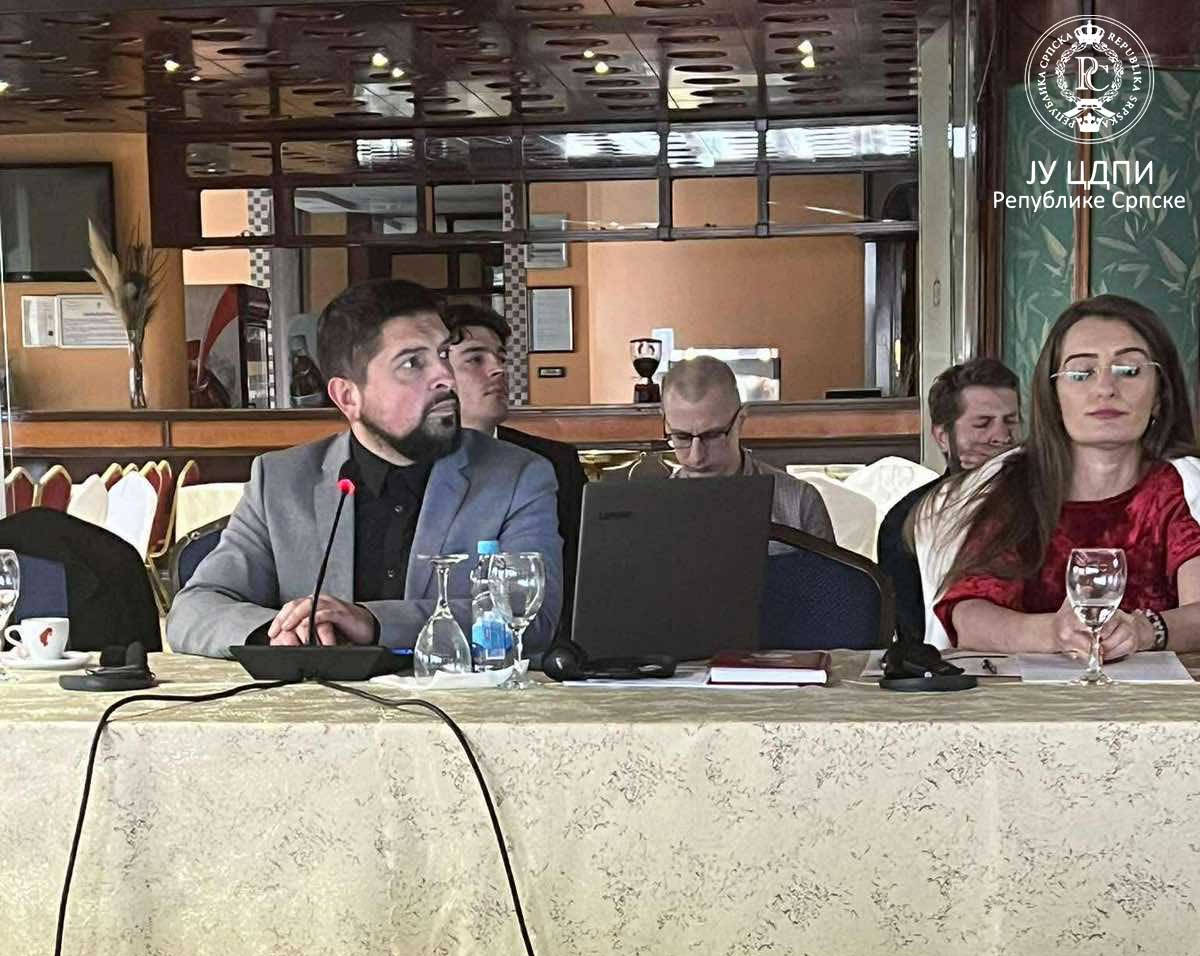
The conference concluded with a youth roundtable, during which the results of group work by young researchers from Russia, CIS countries, Brazil, Egypt, Indonesia, Ethiopia, the United Arab Emirates, Serbia, Bosnia and Herzegovina, Croatia, North Macedonia and other Balkan and European countries were presented. Teams of young scientists, under the mentorship of prominent professors and researchers, showcased their projects within thematic sessions, highlighting current challenges and the potential for global cooperation in the BRICS+ format. The session was moderated by Prof. Dr. Dragana Mitrović, who, in addition to serving as moderator, also acted as a scientific mentor to several research teams, providing expert guidance in shaping their projects. The professional session was further enriched by Aleksandr Nadzhárov, an analyst at the Center for Mediterranean Studies at the National Research University Higher School of Economics in Moscow, who also mentored specific groups of young researchers.
Researcher Ljubiša Malenica from the Center for Socio-Political Research also took part in the conference. During the youth roundtable, he gave a presentation on the possibilities for cooperation between Republic of Srpska, Serbia and BRICS countries in the context of building and modernizing transport and energy infrastructure, as well as the development of energy capacities in Serbia and Republic of Srpska.
This international scientific conference highlighted the importance of multipolar cooperation within the BRICS+ format, emphasizing the role of Serbia and Republika Srpska in establishing new channels of connectivity. The discussions and analyses by experts and young researchers contributed to a deeper understanding of the strategic, economic, and cultural aspects of global cooperation, laying the foundation for future partnership initiatives.
The conference provided a platform for the exchange of ideas and expert insights, encouraging the development of scientific and diplomatic collaboration among participants. Such dialogue is of key importance for strengthening international partnerships and creating new opportunities for economic and cultural exchange within BRICS+.